
Manual QA: What Does a QA Engineer Actually Do on a Real Project?
A Manual QA tester looks for hidden bugs, checks whether the software works the way the client intended, and makes sure end users don't end up frustrated by broken buttons, frozen pages, or unexpected errors. In many ways, a QA specialist acts as the future user's advocate. While developers write the code, the QA engineer examines the product with a critical eye, looking for weaknesses before customers ever see them.
Let's be honest: textbook definitions rarely reflect what the job actually looks like. Instead of another dry explanation, let's walk through a typical day in the life of a Manual QA tester and see what the work really involves.
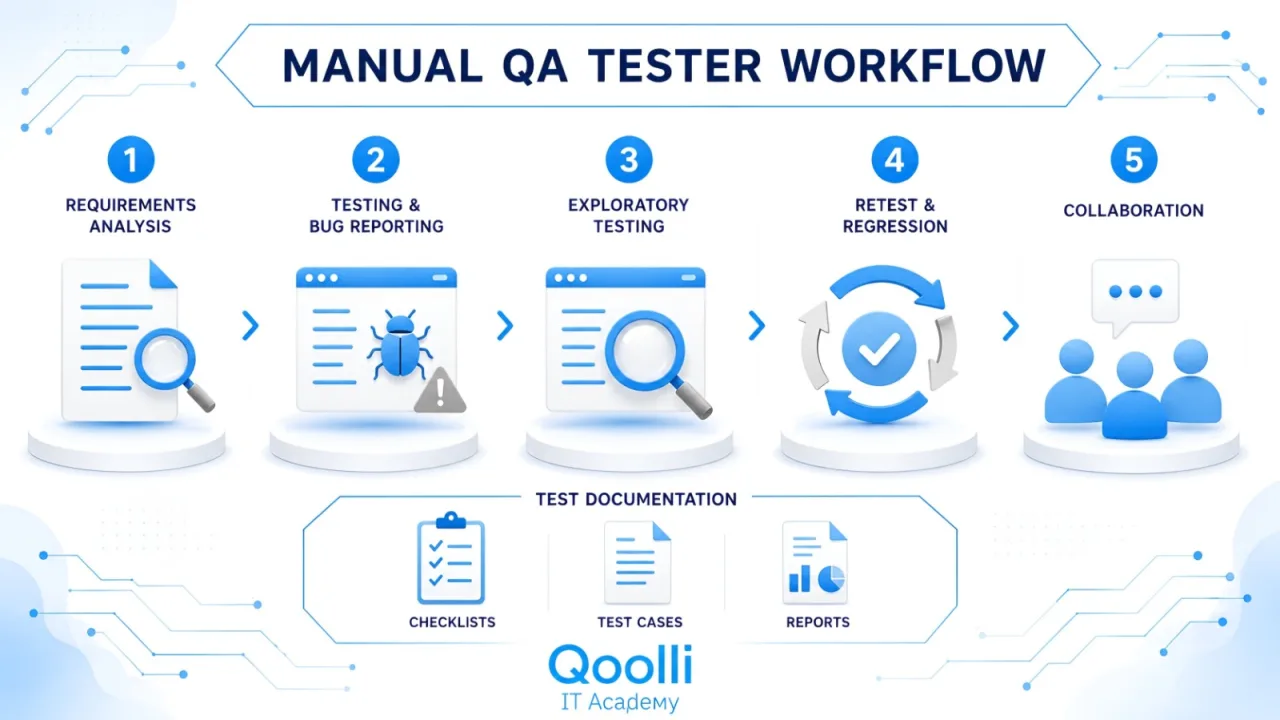
Step 1. Understanding the Requirements (and Reading Between the Lines)
A tester's day rarely begins by clicking through the application. First, they open the project management system (for example, Jira) and dive into the documentation.
Why? Because before testing anything, they need to understand how the system is supposed to work. That means carefully reviewing business requirements, and technical specifications. If a Manual QA tester doesn't understand the logic behind a feature, they can't determine whether it works correctly.
Throughout the day, they're constantly comparing what's happening on the screen with what's described in the requirements. If there are no written requirements, they ask questions and clarify the details with the project managers.
Step 2. Testing Like a User and Writing Bug Reports
Once the requirements are clear, it's time to work with the product itself. The QA engineer goes through the main user journeys. Open the website. Add an item to the cart. Complete the checkout. Everything works? Great.
Then suddenly... the payment button disappears after entering a promo code.
That's a bug. Finding it is only half the job. The next step is documenting it clearly. A good bug report should give developers everything they need to understand the problem, reproduce it on their own machine, and fix it without unnecessary back-and-forth.
Breaking things may be easier than building them, but QA professionals are trained to think differently. Their job is to discover problems in a controlled environment before real users run into them.
Step 3. Thinking Beyond the Happy Path
Think Manual QA is just following a checklist? Think again.
Good testers always explore scenarios that aren't mentioned in the documentation. A developer expects users to enter "25" into the Age field. A tester types "dog" instead. Or holds down the spacebar for ten seconds. Or enters a negative number. What happens if the internet connection drops right before the form is submitted?
Real users do unpredictable things, and software needs to handle that gracefully. A Manual QA tester intentionally tries to make the system fail while it's still safe to do so—long before the application reaches production and real customers encounter those problems.
Step 4. Retesting and Regression Testing
Once developers fix the reported issues, the updated version comes back to QA. The tester performs a retest to verify that the bug has actually been fixed and the feature now behaves correctly.
But that's not the end. Next comes regression testing.
Regression testing checks whether new features or bug fixes have accidentally broken functionality that was previously working perfectly.
Imagine the shopping cart issue has been fixed—but now user registration no longer works. If something like that happens, the feature goes back to development for another round of fixes. This cycle continues until the product is stable and ready for release.
Writing Test Documentation
Bug reports aren't the only documentation Manual QA testers create. They also build resources that help the team both now and in the future:
- Checklists — short lists of features or functions that need to be verified.
- Test cases — detailed, step-by-step instructions describing exactly what to test and what results are expected.
Well-written test cases also serve another important purpose. Later, QA automation engineers can use them as the foundation for automated test scripts, allowing routine checks to run automatically without manual effort.
Step 5. Meetings, and Risk Assessment
Communication is a huge part of the job. Team calls, planning meetings, retrospectives, and reviews—Manual QA testers collaborate with the entire team throughout the development process. They identify potential risks, discuss quality concerns, and suggest improvements before problems become expensive.
Ultimately, a Manual QA tester's biggest responsibility is providing honest, up-to-date information about the product's quality to developers, managers, and stakeholders, helping everyone make informed decisions.
Is Manual QA Right for You?
If you enjoy analyzing how things work, asking the right questions, and improving the quality of digital products, Manual QA can be an excellent way to start a career in IT.
The best place to begin is with a strong foundation. Join our QA testing course to learn the fundamentals, gain hands-on experience on real projects, and confidently launch your career in one of today's most in-demand tech professions.